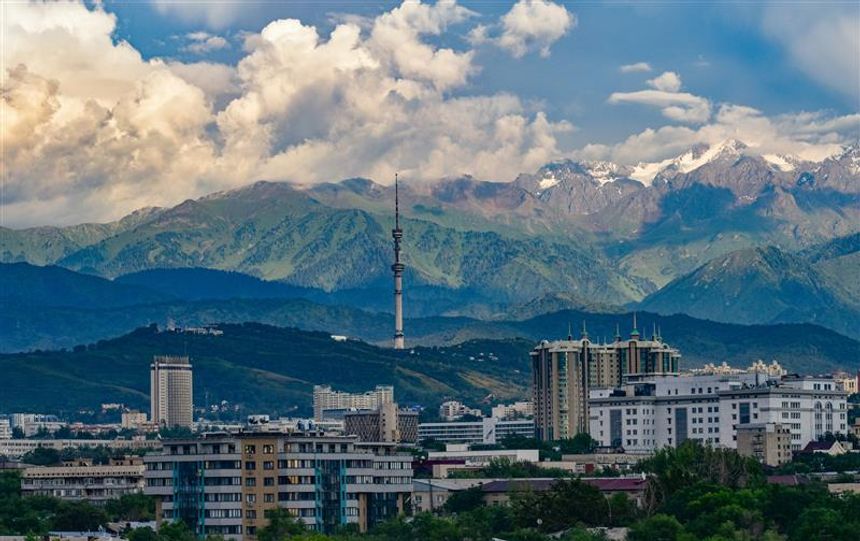

On January 31, 2026, the Constitutional Court of Kazakhstan published a full draft of a new constitution, following the September 2025 announcement of a constitutional reform initiative by the president of Kazakhstan. On February 11, 2026, the president signed a decree scheduling a nationwide referendum for March 15, 2026, to decide on the draft constitution's adoption.
The draft constitution quietly shifts Kazakhstan's legal hierarchy from a monist to a dualist system. Where ratified treaties once clearly outranked ordinary laws, the new text proposes to channel the domestic effect of treaties through implementing legislation. If adopted, the new constitution will mark a meaningful shift for investors — from international law primacy to domestic law gatekeeping — arriving alongside a move to a unicameral parliament and a broadened menu of “special regimes” that will almost certainly diverge from the Astana International Financial Centre (AIFC) model, which has provided a special legal regime in the region.
Summary — What Markets Should Watch
Main focus: The draft constitution reframes how treaties apply at home, where instead of being expressly superior to the statutes, the domestic application of treaties will be set by legislation.
Institutional reset: A unicameral Kurultai (145 deputies) and a new vice presidency will aim to speed decision-making and clarify succession.
Special regimes 2.0 (not AIFC 2.0): Generalized “special legal regimes” will likely be tailored by city/sector, with distinct administrative and potential judicial features. Expect zone specific permitting rules, supervisory authorities, forum options (court/arbitration), and interim relief/enforcement mechanics — so each zone will behave like a defined mini jurisdiction that can materially change timelines and remedies relative to the AIFC’s finance focused carve out.
Timeline: The referendum on the constitution is set for March 15, allowing further legislation introduction throughout 2026 and into early 2027.
1) The legal hierarchy shift: from treaty primacy to legislative gatekeeping
Kazakhstan’s current constitution gives ratified international treaties precedence over domestic laws (constitution, art 4(3)). Source: Akorda (official text): Constitution of the Republic of Kazakhstan (Akorda).
The draft constitution keeps international treaty obligations within Kazakhstan’s “law in force/current law,” but provides that their domestic operation/application is “determined by law” (Draft constitution, art 5(1) and 5(3)). Source: Constitutional Court of the Republic of Kazakhstan (official GOV.KZ publication): https://www.gov.kz/memleket/entities/ksrk/press/news/details/1152063?lang=ru
In practice, this moves the system from one where treaties have an automatic superior status to one in which parliament and the statutes they implement can influence the effect of international commitments.
For investors, that change elevates the importance of implementing statutes, forum selection, and enforcement mechanics in state-facing contracts.
2) Investor‑relevant comparators: Kazakhstan’s regional peers
Across the region, special regimes for investment and finance are almost universally statutory (set up and adjusted by ordinary laws). Kazakhstan is somewhat different in that the AIFC model is constitutionally enabled, with the detailed regime then implemented through constitutional law instruments rather than sitting purely in ordinary legislation.
By contrast, in much of the region, these regimes are anchored primarily in ordinary statutes, which can leave them more exposed to later legislative override.
The main drawback is hierarchy and durability risk: a later ordinary law can more readily amend, narrow, or override the regime (including incentives, eligibility, regulatory powers, or dispute resolution pathways), which can reduce predictability for long-term capital.
Although this may soon be not only about Kazakhstan: Uzbekistan has signaled a move toward a higher order anchoring for its International Center for Digital Technologies (“Enterprise Uzbekistan”). The initiative envisages a separate jurisdiction / special legal regime framed by reference to English common law principles (or leading international financial centre standards), with disputes potentially routed to a specialized independent court, and an instruction to prepare a draft constitutional law to underpin the regime. For investors, the significance is less the label and more the direction of travel: moving from “policy by ordinary statute” toward a clearer hierarchy plus dedicated institutions.
Does a constitutional carve out still matter if constitutions get amended often? Yes — because a constitutional statute (or constitutionally enabled regime implemented via constitutional statute) can still raise the amendment bar, clarify the regime’s priority over ordinary law, and help lock in separate institutions and procedures that provide procedural certainty. The caveat is that frequent constitutional or framework law change can dilute the signal, so markets typically look for secondary anchors — robust implementing acts, clear transitional/grandfathering clauses, and strong regulatory/judicial infrastructure — alongside the carve out.
3) Special regimes in Kazakhstan will (and should) differ from the AIFC
The draft constitution generalizes “special legal regimes” beyond the AIFC’s financial focus and allows tailored administrative, and potentially, judicial features for “accelerated development cities”. Each regime will need a clear founding act spelling out permitting, registries, supervising authorities, available forums, interim measures, and recognition/enforcement mechanics. Investors are expected to treat each regime as a distinct jurisdictional product with its own risk curve.
The first practical deployment of this generalized special regime model is Alatau City (Almaty oblast), designated a city of accelerated/advanced development by Presidential Decree (Sept 26, 2025); the Government was tasked to submit a draft Constitutional Law to entrench a bespoke regulatory hierarchy and tailored rule making (with discussion of incorporating AIFC style elements alongside Special Economic Zones tooling).
In January 2026, authorities announced the Iconic Towers mega project for Alatau’s Gate District — a ≈$800m business complex whose architectural concept is by Skidmore, Owings & Merrill, renowned for designing some of the world's famous buildings, including the Burj Khalifa, One World Trade Center, and Willis Tower.
4) What to change now in documents and structures
It is prudent to look closely at dispute resolution language, as it frames the path to resolution if relationships strain, influencing costs, timelines, and leverage long before any dispute arises.
Recognition/enforcement undertakings in the contract, plus consent to service and submission to jurisdiction are important. Choose an arbitration seat with strong interim relief and enforcement support; for state/state‑owned counterparties: obtain, where possible, sovereign immunity waivers and asset specific waivers.
Stabilization/tax: include change in law and tax stability provisions aligned with any forthcoming special regime statute.
BIT/FTA backstop: confirm coverage and preserve consent to investor‑state arbitration (e.g., ICSID).
Undertake zone by zone diligence to assess whether the zone provides published procedures, binding service levels; define time limits, remedies for delay (fee rebate, deemed decision), and escalation/appeal windows in the zone law or charter.
5) Expected timeline and near term catalysts
• Q1 2026: Draft constitution and public discussion launched.
• Feb. 11, 2026: Presidential decree sets a nationwide referendum for March 15, 2026, on adopting the new constitution.
• July 1, 2026: New constitution goes into force (according to the published draft language).
• 2026 (expected): After the referendum, a wave of implementing statutes (watch the “law in force” article and special regime enabling acts).
• 2026-2027: Sequencing of zone-specific charters and procedure codes; Constitutional Court clarifications on potential issues.
Signals from the deal economy: one pullback — and multiple push-ins
Caution from a super major
February 6-7, 2026, public reports indicated that Shell would pause new investments in Kazakhstan while multimillion-dollar legal disputes play out. The reports followed a London arbitration setback for Shell involving the Karachaganak oil field that could expose operators to $2 billion to $4 billion in damages. (Operations continue; new capital is on hold.)
China doubling down
In June 2025, Kazakhstan and Chinese companies signed 58 commercial documents worth over $24 billion; additional announcements put the running total of joint projects and investment stock substantially higher, spanning energy, infrastructure, agro‑processing, and manufacturing.
Qatar investment grows
In February 2024, Kazakhstan and Qatar signed $17.6 billion of commercial documents (gas processing at Kashagan, compressor stations and the Beineu–Bozoy–Shymkent expansion, a major combined cycle gas turbine in Kyzylorda). Later in October 2024, the Senate ratified a long‑term strategic partnership that envisages approximately $20 billion across nine projects (telecoms, energy, transport, petrochemicals, agriculture, finance), with investment protections and fiscal stability assurances. By 2025, Qatar was cited among the top five investors in Kazakhstan and its annual investment flow into Kazakhstan surged.
Vietnam enters with e‑mobility and services
Vietnamese conglomerate VinGroup and EV taxi company Green & Smart Mobility are evaluating EV transport services, national charging networks, and local service/production footprints, with talks of opening a CIS regional office in Almaty, Kazakhstan. Broader Vietnam–Kazakhstan economic ties are being created through business-to-business pipelines and sector projects (light industry, food, agriculture, tourism, IT, healthcare).
The Gulf’s clean energy wave (UAE & Saudi Arabia)
United Arab Emirates renewable energy investor Masdar has locked in 1GW of wind capacity in Kazakhstan and, in May 2025, announced cross‑sector agreements (energy, ports/logistics, data/AI, finance) worth billions of dollars. Masdar also has plans for baseload “24/7” renewables and up to 2GW of storage. Saudi Arabia’s ACWA Power is advancing a 1GW wind project with an initial investment of approximately $1.5 billion. These signal multi-year, programmatic capital and offer diversified funding away from any single bloc.
Bottom line
Kazakhstan remains an attractive location for investment, but the legal risk will potentially shift as we gain constitutional clarity on the ways that high value disputes will be handled in practice.
Mehleen Gehler-Rahman contributed to this article.
/Passle/67ead603e72212c76f32080c/SearchServiceImages/2026-07-17-21-38-48-742-6a5aa0e8015b657b93670ee7.jpg)
/Passle/67ead603e72212c76f32080c/SearchServiceImages/2026-07-15-17-48-48-213-6a57c800f03bcb784b10f8ce.jpg)
/Passle/67ead603e72212c76f32080c/SearchServiceImages/2026-07-07-14-19-34-935-6a4d0af62c6b2a017681fa65.jpg)
/Passle/67ead603e72212c76f32080c/SearchServiceImages/2026-06-29-16-00-50-262-6a4296b20d01d7de36517969.jpg)