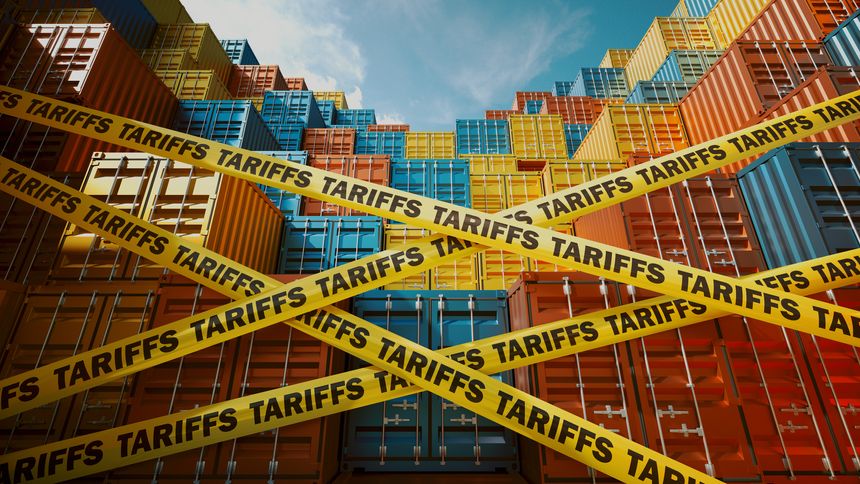


On March 12, 2026, the United States Trade Representative (USTR) announced that it had initiated expedited investigations into 60 countries under Section 301(b) of the Trade Act of 1974 “related to the failure to impose and effectively enforce a prohibition on the importation of goods produced with forced labor.” A full list of the countries identified can be found at the end of this article. These investigations are meant to determine whether the acts, policies, and practices of each country are unreasonable and discriminatory, resulting in a burden or restriction on U.S. commerce. A determination that the countries are discriminating and burdening U.S. commerce by undercutting labor costs would provide an avenue for the administration to impose tariffs on the importation of goods from those countries.
What Is a Section 301 Investigation?
Section 301 of the Trade Act of 1974 allows the USTR to investigate whether the rights of the United States are being denied by a country’s conduct, and whether those actions burden or restrict U.S. commerce. Once the USTR initiates an investigation, it must consult with each country it is investigating in an attempt to find a mutually beneficial agreement between the two economies. After consultations, the Section 301 Committee of the Trade Policy Staff Committee, led by the USTR, conducts the investigations by reviewing petitions and public comments, holding public hearings, and making recommendations. The USTR then makes its decision based on those recommendations.
Decisions may be mandatory or discretionary depending on the severity of the burden imposed on U.S. commerce and whether the burden was justifiable. If the USTR concludes that there is a violation of the United States’ rights, the Trade Act authorizes the USTR — at the direction of the president — to remedy the violation by prioritizing the imposition of tariffs or other import restrictions on those countries. Determinations may be challenged at the World Trade Organization (WTO).
The government could be utilizing Section 301 as a secondary avenue to impose tariffs, after the tariffs imposed under the International Emergency Economic Powers Act (IEEPA) were struck down by the United States Supreme Court in February 2026. The Supreme Court ruled in Learning Resources, Inc. v. Trump that President Trump's tariffs exceeded the powers granted to him as president under the IEEPA.
The Investigated Countries and the Focus of the Investigations
The 60 countries being investigated under Section 301 are the top sources of imported goods into the United States, making up over 99% of all goods imported into the country in 2024. The notice of investigation issued by the USTR does not provide much detail as to the specific concerns prompting investigations into each country. Many of the listed countries have regulations prohibiting forced labor in supply chains and/or requiring corporate transparency of remediation steps and tactics to rid forced labor from their businesses.
For example, in the European Union (EU), the Forced Labour Regulation bans products made with forced labor from being imported into, exported from, or sold (including online) within the EU market. Enforcement is set to begin in December 2027. The Corporate Sustainability Reporting Directive (CSRD) and the Corporate Sustainability Reporting and Due Diligence Directive (CSDDD) are complimentary regulations that require companies to be duly diligent in identifying, preventing, and remedying adverse human rights impacts on their operations, and requires covered companies to report on their social performance.
The United Kingdom and Australia have regulations — the Modern Slavery Act of 2015 and 2018, respectively — which combat forced labor in supply chains by creating criminal offenses applicable to individuals and companies, including through a company’s subcontractors that benefit from forced labor in their supply chains. The Acts also require a supply chain transparency report, in which companies must publish an annual report detailing the steps they take to ensure forced labor is not within their supply chain or business.
In its notice of investigation, the USTR referenced such foreign policies and mentioned that several other countries are committed to adopting similar policies, but challenged that such prohibitions were “insufficient to prevent firms from profiting from forced labor.” Thus, there is a belief that companies will have a higher standard to reach if they have any operations that land in the 60 target nations.
Forced Labor Regulations in the United States
The United States prohibits the importation of goods produced or manufactured by forced labor under the Tariff Act of 1930. Other regulations include the Federal Acquisition Regulation (FAR), which prohibits government employees, entities, and contractors/subcontractors from engaging in human trafficking, and the California Transparency in Supply Chain Act (CTSCA), which encourages corporate transparency by requiring companies that produce and/or sell goods on the California market to engage in due diligence to mitigate risks of forced labor and disclose steps taken to ensure their supply chains are free of forced labor.
Timeline for Next Steps
Currently, the USTR is soliciting public comments, specifically highlighting an interest in which countries have implemented effective policies, and what actions the U.S. should take in response to trade conduct that is harmful to U.S. commerce. Public comments can be submitted through the link here until April 15. Afterward, public hearings will be held in Washington, D.C., between April 28 and May 1. Due to the expedition of these investigations, the USTR has noted that the unofficial target date to complete the investigations and impose tariffs is July 24, 2026.
Companies with direct operations or suppliers in these countries should take advantage of the comment period and consider what steps may be needed should these investigations ultimately target locations where their supply chains interface.
List of 60 Countries
- Algeria
- Angola
- Argentina
- Australia
- The Bahamas
- Bahrain
- Bangladesh
- Brazil
- Cambodia
- Canada
- Chile
- China, People’s Republic of
- Colombia
- Costa Rica
- Dominican Republic
- Ecuador
- Egypt
- El Salvador
- European Union
- Guatemala
- Guyana
- Honduras
- Hong Kong, China
- India
- Indonesia
- Iraq
- Israel
- Japan
- Jordan
- Kazakhstan
- Kuwait
- Libya
- Malaysia
- Mexico
- Morocco
- New Zealand
- Nicaragua
- Nigeria
- Norway
- Oman
- Pakistan
- Peru
- Philippines
- Qatar
- Russia
- Saudi Arabia
- Singapore
- South Africa
- South Korea
- Sri Lanka
- Switzerland
- Taiwan
- Thailand
- Trinidad and Tobago
- Türkiye
- United Arab Emirates
- United Kingdom
- Uruguay
- Venezuela
- Vietnam
Katt Godfray contributed to this article.
/Passle/67ead603e72212c76f32080c/SearchServiceImages/2026-07-17-21-38-48-742-6a5aa0e8015b657b93670ee7.jpg)
/Passle/67ead603e72212c76f32080c/SearchServiceImages/2026-07-15-17-48-48-213-6a57c800f03bcb784b10f8ce.jpg)
/Passle/67ead603e72212c76f32080c/SearchServiceImages/2026-07-07-14-19-34-935-6a4d0af62c6b2a017681fa65.jpg)
/Passle/67ead603e72212c76f32080c/SearchServiceImages/2026-06-29-16-00-50-262-6a4296b20d01d7de36517969.jpg)